Wednesday, 15 February 2023

Tuesday, 14 February 2023
Intense Pushback from Activists Forces Xinjiang Governor to Cancel Europe Trip
In what is being lauded as a victory for the Uyghur community, Xinjiang governor Erkin Tuniyaz has reportedly canceled his planned meetings with European officials this week after intense pushback from lawmakers and human rights activists. Tuniyaz has been sanctioned by the U.S. government for his role in what the U.N. described as “serious human rights violations” in Xinjiang that “may amount to crimes against humanity.” He was initially expected to visit London, Paris, and Brussels over the next week, as Beijing launches a new charm offensive in Europe. Cristina Gallardo from Politico reported on the cancellation of Tuniyaz’s U.K. visit:
Erkin Tuniyaz, who had not been invited by the U.K. government, has decided against traveling to London, according to a U.K. official and campaigners pressing against his visit. Tuniyaz has also cancelled a trip to France and Belgium planned for later this week.
Prime Minister Rishi Sunak’s official spokesman told reporters on Monday that Tuniyaz would meet with Foreign Office (FCDO) officials who would convey their “abhorrence” about the Chinese government’s treatment of Uyghurs in Xinjiang.
[…Then on Tuesday a]n FCDO spokesperson said: “We understand the Governor of Xinjiang has cancelled his visit to the UK. The UK Government will continue to use all opportunities to take action against China’s unacceptable human rights abuses in Xinjiang.” [Source]
A legal filing, a protest, a cross-community letter and countless articles later it's been confirmed: genocide perpetrator Tuniyaz will not meet with the FCDO.
This is a HUGE win for the #Uyghur community and all those who stand beside them. https://t.co/mdbn0KgU2M
— Stop Uyghur Genocide (@UyghurStop) February 14, 2023
According to Le Monde, Tuniyaz was scheduled to attend a reception in Paris on Friday, organized by the Chinese embassy in France, before visiting Brussels from Sunday to Tuesday of next week. In Brussels, he was also scheduled to meet officials from the European External Action Service and hold a briefing with media and scholars. Invitees to the event in Paris were told it was canceled due to “an important domestic agenda,” and the Chinese mission to the E.U. stated that the Brussels trip was “postponed […] due to scheduling reasons.”
Prior to the cancellation of the London visit, many Uyghurs had been calling on the British government to cancel its meeting with Tuniyaz. Rahima Mahmut and other activists organized protests outside of the U.K. Foreign Office. Dolkun Isa, president of the World Uyghur Congress, called the planned visit “shocking and incomprehensible,” adding: “Proven complicity in crimes against humanity and genocide must be a clear red line, and must lead to justice and accountability instead of engagement.”
Beyond the moral outrage, some leading politicians and activists questioned the strategy behind the original decision to meet with Tuniyaz. “While engagement with the People’s Republic of China remains necessary in general, we strongly question the wisdom of officially meeting with someone personally involved in the persecution of Uyghurs,” said Reinhard Bütikofer and Miriam Lexmann, members of the European Parliament. In the New Statesman, Rayhan Asat argued that regardless of whether meeting Tuniyaz was a good-faith attempt by the British government to address human rights violations in Xinjiang, the meeting would only allow Beijing to legitimize its policies in the region:
[T]he Foreign Office in London has attempted to justify meeting Tuniyaz (who is Uyghur himself) on the grounds that officials will press him for change. This is a legitimate goal, but since its inception, the Xinjiang chairman’s office has been purely symbolic, a token gesture of the Chinese Han government towards the “autonomy” and ethnic self-governance of the Uyghur region. Appealing to Tuniyaz for change is pointless.
[…] In response to questions from MPs James Cleverly, the Foreign Secretary, indicated that he was seeking feedback from civil society groups about Tuniyaz’s visit. However, this invitation looks more like an attempt to legitimise rather than to critically assess Tuniyaz’s visit. None of us who advocate for Uyghur human rights want to lend credibility to this ill-conceived meeting with a genocidal bureaucrat who has no will to change the system he serves.
I am not dismissing an attempt in good faith at a solution. There is simply no indication that this meeting will be anything other than an empty example of “engagement” for the Chinese government to gesture towards while changing nothing in the Uyghur homeland. It would only serve the Communist Party’s goal of further dehumanising Uyghur people and lying about its genocidal policies. When China finally admitted to imprisoning Uyghurs in “vocational training centres” it used Tuniyaz as its spokesman. He told the world that Uyghurs are radicalised and uneducated, and that in the camps “they learned basic practical skills and graduated from the centre with a better quality of life”. [Source]
🚨LIVE NOW🚨
We're outside the FCDO with a group of Uyghur community members, activists and allies to demand a meeting with Foreign Sec @JamesCleverly.
Erkin Tuniyaz should never have been invited to the UK, now the Uyghur community demand engagement of their own.#TuniyazOUT pic.twitter.com/BRABm4PSjf
— Stop Uyghur Genocide (@UyghurStop) February 13, 2023
While the EU and U.K. officials repeat the importance of engagement [with the oppressors], the CCP propaganda machinery prepares to take a full credit of these visits showing to their population how their policies are endorsed in Europe. https://t.co/mdpqKKtVwI
— Sari Arho Havrén (@SariArhoHavren) February 13, 2023
Lawyers and lawmakers also mobilized to increase pressure on the British government. Lawyers representing Erbakit Otarbay, a Kazakh man who says he was tortured in Xinjiang, submitted evidence to the London Metropolitan Police’s war crimes team and petitioned the attorney-general to arrest Tuniyaz upon his arrival in the U.K. Amnesty International’s China Researcher Alkan Akad stated that “judicial authorities in European states should launch their own investigations into whether Erkin Tuniyaz has responsibility for crimes under international law, including torture, or other serious human rights violations that would warrant a prosecution.” The U.K. Foreign Office said it expected Tuniyaz to travel on a diplomatic passport, and it was unclear to what extent the threat of arrest played a role in the cancellation of his meeting with the government. BBC political correspondent Damian Grammaticas reported on the legal argument for arresting Tuniyaz:
[Erbakit Otarbay’s] legal team say Erkin Tuniyaz, as the governor of Xinjiang, is not entitled to diplomatic immunity because he holds a position of “state responsibility” and was “directly responsible for the implementation of policies designed to restrict the basic rights and freedoms of Uyghur people”.
They say torture is a “universal jurisdiction” offence that can be prosecuted in any country, but the attorney general must approve it.
[…In a letter to the attorney-general, seven MPs wrote:] “We hope you will give this application serious consideration. In the absence of an international mechanism to hold to account those responsible for Uyghur abuses, we must seize every opportunity to ensure accountability”. [Source]
Mr Tuniyaz is not welcome in Brussels! He belongs on a sanctions list, not a visitors’ list@EPPGroup @vonderleyen @JosepBorrellF https://t.co/kE7eBCHeF9
— Miriam M. Lexmann (@MiriamMLex) February 14, 2023
As the number-two official in Xinjiang, Tuniyaz has played a central role in managing and defending the concentration camps. A leaked internal document from the Xinjiang Police Files shows that he exhorted the government entity overseeing camp operations and policing to ensure the “absolute security” of the camps and their “anti-escape measures,” directly implicating him in the enforcement of the state’s repression. In 2019, Tuniyaz also defended the Chinese government’s policies in Xinjiang before the U.N. Human Rights Council, touting the amenities in the camps just as Xi Jinping was revealed to have ordered the “organs of dictatorship” to show “absolutely no mercy” in Xinjiang.
In a stunning move, Erkin Tuniyaz, Xinjiang governor and vocal camp defender, is expected to meet U.K. gov't officials and EU diplomats.
New evidence from the #XinjiangPoliceFiles shows he gave personal orders on "escape prevention" from the camps: /1https://t.co/Rb0j5Kn2CF
— Adrian Zenz (@adrianzenz) February 9, 2023
The planned visits would have coincided with several other events this week that will put China’s human rights record under international scrutiny. This weekend, Wang Yi is expected to speak at the annual Munich Security Conference, where European leaders will discuss regional security against the backdrop of Russian aggression in Ukraine and China’s policy of “pro-Russian neutrality.” Prior to that, from February 15-16, China will defend its record before the U.N. Committee on Economic, Social and Cultural Rights, in a test of its compliance with the International Covenant on Economic, Social and Cultural Rights, for the first time since China’s last review in 2014. Outlining China’s efforts to bamboozle the U.N., William Nee described in The Diplomat how China is increasingly employing government-organized NGOs (GONGOs) to stifle criticism of its human rights record:
Deploying GONGOs is an obstructionist tactic the Chinese government increasingly uses when U.N. committees assess China’s performance in implementing the treaties it has ratified. For the upcoming CESCR review, at least 23 GONGOs or other entities tied to the party-state submitted reports to the Committee as “civil society organizations” – compared with just four such submissions for the 2014 CESCR review. Like fake Luis Vuitton bags at a bootleg market, these fake NGOs flood the market and diminish the value of the real products. Committee members waste valuable time reading their reports, listening to their interventions, and trying to decipher which NGOs are real and which are fake.
Not only does the Chinese government have multiple opportunities to bombard the CESCR with its “discourse power” using its army of GONGOs, but it also benefits from a Trojan Horse inside: a veteran Chinese diplomat, Shen Yongxiang, is actually a Committee member. While Shen is experienced and well educated, according to U.N. rules, members serving on U.N. treaty bodies should be independent and impartial. But, as a new report from the International Service for Human Rights points out, individuals from the PRC serving on United Nations treaty bodies often have deep, long-standing affiliations with the Chinese government, or even official roles in the Communist Party. [Source]
This is proof of the effectiveness of Xinjiang targeted sanctions. EU is considering a law like US Uyghur Forced Labor Prevention Act. Tuniyaz’ trip is meant to fend that off.
— James Millward 米華健 (@JimMillward) February 9, 2023
Finbarr Bermingham from the South China Morning Post reported on another major event this week, the resumption of the EU-China human rights dialogue:
EU sources confirmed that talks would take place in Brussels at the end of [this] week, following a pledge to resume them during the EU-China summit last April.
The Chinese delegation will be led by a deputy director general from Beijing’s Department of International Organisations and Conferences under the country’s foreign ministry, separate sources confirmed, while the EU will be represented by human rights staff in its External Action Service (EEAS).
The dialogue will be the 38th edition of the prickly discussions, which were suspended after the EU sanctioned four Chinese government officials for alleged human rights abuses in Xinjiang Uygur autonomous region in March 2021. [Source]
However, it is unlikely that these dialogues will allow the E.U. to persuade the Chinese government to reverse course on its human rights policies in Xinjiang. In an interview with the Global Times on Monday, Chinese ambassador to France and Monaco Lu Shaye said, “[T]he reality is that neither side can change the other. So why can’t we put it aside and not let such differences hinder the cooperation between the two sides on common interests? I think Europe should not try to ‘hit China with an ideological club’ and expect cooperation in return.” Andrew Stroehlein, European Media and Editorial Director at Human Rights Watch, sharply criticized the dialogues, characterizing them as pointless, and even counterproductive to the pursuit of real improvements in human rights:
These bilateral meetings have been a recurring exercise in pointlessness for decades. There have been 37 previous rounds of such dialogues, and they’ve contributed zero to human rights progress in China. In fact, the human rights situation in China has only deteriorated.
The EU’s human rights dialogues with China are actually worse than pointless, because they give EU leaders an excuse to avoid discussing China’s abuses at the highest levels, where it matters most.
They can brush it off with, “Well, we discussed that elsewhere already,” and human rights are thus disconnected from issues Beijing actually cares about, like trade. With no EU leverage points or benchmarks in the mix, the dialogues are simply a box-ticking exercise, held with no ambition to secure positive change.
Worst of all, perhaps, the dialogues give Beijing a propaganda coup. Chinese officials can say they’re open to talking about human rights. It helps Beijing look good internationally – while committing crimes against humanity back home. [Source]
Human Rights Watch +other civil society groups have made clear, for years, that these dialogues—which had no benchmarks for progress, and which exclude independent voices from China —should not continue unless the two sides make them a meaningful exercise. https://t.co/Ec6CAhqFMg
— Maya Wang 王松蓮 (@wang_maya) February 10, 2023
As the European Union resumes its human rights dialogue with the Chinese government, it should resist Beijing's usual efforts to treat dialogue as a substitute for public condemnation and targeted sanctions. Pressure is more important than quiet dialogue. https://t.co/VePwYzZCEt
— Kenneth Roth (@KenRoth) February 13, 2023
source https://chinadigitaltimes.net/2023/02/intense-pushback-from-activists-forces-xinjiang-governor-to-cancel-europe-trip/
Monday, 13 February 2023
Word of the Week: Huminerals (人矿 rén kuàng)
The new word “humineral” (人矿 rén kuàng) has taken the Chinese internet by storm and is now a sensitive word subject to censorship. First introduced in a now-censored Zhihu post on January 2, 2023, “humineral”—a portmanteau of 人 rén (“person”) and 矿 kuàng (“ore,” “mineral deposit,” or “mine”) in the original Chinese—describes a person relentlessly exploited by society until they are eventually discarded on the refuse pile. The original Zhihu post elucidated 10 tenets of the “humineral,” three of which CDT has translated below:
1. Huminerals: You are a resource, not a protagonist. You are a means, not an end. Your life’s work will go towards the fulfillment of others instead of the pursuit of your own desires.
2. The life of a humineral can be divided into three stages: extraction, exploitation, and slag removal. Investment in your education over your first decade or so is oriented at extracting your potential—turning you into usable ore. The middle decades are a process of exploitation and consumption. When you’re finally useless, they’ll use the least polluting method possible to dispose of you.
8. Huminerals power the motors that turn the wheels of history. Huminerals have few other choices: either fuel history’s engine, or be ground beneath its wheels. Of course the inverse is true. If huminerals were to stop propelling history, then those other huminerals who abstained would not be crushed. Yet there are always huminerals who see more value in a lifetime of being fuel than to risk being flattened. [Chinese]
“Humineral” drew immediate comparisons to “beasts of burden” and “cut chives,” both of which have become popular self-referential slang for Chinese netizens who feel exploited by the system. A popular joke about “huminerals” holds that the best resources to exploit are “Saudi oil, Australian iron, and Chinese people.” “Huminerals” was soon banned across the entire Chinese internet. Although it once rose to #11 on Weibo’s trending list, the hashtag “huminerals” (#人矿) now returns no results in either English or Chinese. All searches for “huminerals” on Douyin, China’s TikTok, only return results from government-affiliated accounts. Similar searches returned no results on WeChat, Zhihu, and Jinri Toutiao. The only search result for “humineral” on Baidu attributed the term to former Taiwanese president Ma Ying-jeou.
The idea of “humineral” is closely tied to the concept of the “demographic dividend,” a technical term for the rapid economic growth that may follow a decline in a country’s birth rate, death rate, and ensuing change in a population’s age structure. Last year, China’s population declined for the first time since the Great Leap Forward. One censored essay, originally posted to Zhihu, attributed the popularity of the term “huminerals” to “dissatisfaction with and resistance to a society that has appropriated too much labor value, has restricted future wealth via high housing prices, and lacks fully-developed social security benefits.” Chinese women have balked at government efforts to induce higher birth rates, refusing the government’s perceived effort to turn them into “huminerals.”
source https://chinadigitaltimes.net/2023/02/word-of-the-week-huminerals-%e4%ba%ba%e7%9f%bf-ren-kuang/
Friday, 10 February 2023
Wailing Wall Special Edition: The Third Anniversary of Whistleblower Dr. Li Wenliang’s Death
February 6 marked the three-year anniversary of the death of Dr. Li Wenliang, a young ophthalmologist at Wuhan Central Hospital whose attempts to warn colleagues and the public of an emerging coronavirus made him an heroic symbol of free speech and principled resistance. Punished by his employer, forced to sign a letter of admonishment, and chastised by Chinese state media for being a “rumormonger,” Dr. Li later contracted COVID-19 in the course of his work at the hospital and died.
Since then, the comments section under Li Wenliang’s final Weibo post has become known as China’s “Wailing Wall,” a place netizens come to mourn and to celebrate, to mark personal milestones or comment on current events, and to thank Dr. Li for being a whistleblower and assure him that his sacrifice will not be forgotten. (CDT editors regularly collect and archive Wailing Wall content, including the selection of comments translated below.)
Many of the commenters who visited the Wailing Wall in early February to mark the third anniversary of Dr. Li’s death mentioned the Chinese Lunar New Year, the resurgence of fireworks, the recent wave of COVID deaths and infections, and the hoped-for end of the pandemic. Some assured Dr. Li that they wouldn’t forget how the government had treated him, how he was forced to sign a humiliating “admonishment” letter, and how he turned out to be right about the threat of COVID-19. One visitor even posted a circa-January-2020 montage of CCTV anchorpersons criticizing “rumormongers” and a copy of the actual letter Dr. Li was forced to write. Others repeated the doctor’s own words: “There should be more than one voice in a healthy society.”
More than a few Wailing Wall visitors were careful to note that the correct date of Dr. Li’s death is February 6, 2020—for although his death was officially announced on February 7, 2020, it seems clear that by the previous evening, he had suffered organ failure and already passed away. The delayed time of death was likely an attempt by the hospital and local government to prove that they did everything possible to save Dr. Li, who had by then become a nationwide celebrity. This was further substantiated by a New York Times investigation in October of 2022.
In addition to the online commemorations of Dr. Li, there were also remembrances and rallies held in various cities across the globe. Writing for ChinaFile, Yangyang Cheng, Fellow and Research Scholar at Yale Law School’s Paul Tsai China Center, described speaking at a February 5 rally in Boston to commemorate the third anniversary of Dr. Li’s death, to advocate for the release of the detained “White Paper” protesters, and to voice support for free expression against tyranny. The following is a brief passage from her stirring speech:
If there’s any lesson from a global pandemic, three years and counting, it is that there’s no return to the normalcy of yesterday or escape to the comfort of elsewhere. Each of us with a stake in the future will be faced with some very difficult choices. When that moment comes—and make no mistake, it is already here—I hope memories from this gathering can be a source of strength and affirmation. I hope we can keep the names of the forcibly silenced close to our hearts. Let them hold us accountable. Let them make us bolder and more honest and more loving. [Source]
北小野的荒原:It’s been three years. The pandemic is over, and fireworks have returned. But we all remember the things that happened.
梦见摸月亮:After three years, I’ve learned not to see, not to hear, not to speak, and not to believe anything they say.
稻草人2010:Three years later, the pandemic is apparently over. Many people died this winter, and it seems that everyone has experienced estrangement and loss. I can’t imagine what you must have thought of us these past three years, just like I can’t imagine what people in the future will think of us.
Sebastian Hee :

A series of screenshots from January 2020 shows news anchors from channels CCTV 13 and CCTV 2 reporting on “eight people punished for spreading rumors” about a new respiratory virus. The last image is the letter of admonishment that Dr. Li Wenliang was forced to sign.
梦寐以求之不得丶:During three years of the pandemic, we’ve been through far too much … From Lunar New Year’s Eve to today’s Lantern Festival, I noticed that every house was brightly lit, everyone was enjoying long-awaited reunions, the streets were thronged with people, and fireworks lit up the sky. It was a wonderful feeling, and such a relief! It’s been a long time coming. Happy Lantern Festival, Dr. Li.
曾永祺Xian:Dr. Li, lately I’ve been following “The Knockout,” and I always think of you when I see the character An Xin. Every year on this day, I come here to talk to you. I pray that I will never forget you, and also that I can hold fast to those feelings of grief and indignation. I will strive to follow your example in my professional career, and always adhere to the belief that “There should be more than one voice in a healthy society.“
兔兔兔兔兔兔兔Za:It’s been three years, and we’re finally right back to where we started. They want to take everything that’s happened in the last three years and delete it with one keystroke.
Nihility_zy:Nothing has changed. This society still only has one voice.
服务大管家12138:I pray that your three-year-old self will have been reincarnated in a society where multiple voices coexist harmoniously and are respected.
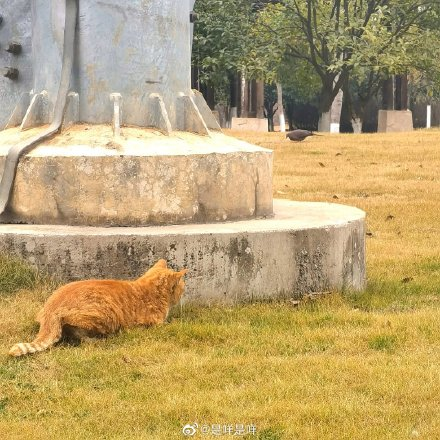
是咩是咩:I saw a lot of fresh flowers in front of the grave today. No one has forgotten you. On the way back, there was an orange cat stealthily watching the pigeons.
wiwiggcc:@评估师崔太平: Just an ordinary hard-working doctor, a person with basic professional integrity, he was admonished for his well-intentioned warning and thus transformed into a hero. There is something tragic in this, for it shows that our society is sick, and that the sickness is serious.
椰子无限假设:Dr. Li, I brought a bouquet of flowers to Central Park in New York last year, and sat on the bench with your name on it for a long time. I’ve never forgotten you, and I hope that is of some comfort to you. We’re still just trying to live our lives, and things finally seem to be taking a turn for the better. But we still miss you.
当温柔已沉默:It has been three years—how have you been doing lately? Rest assured, Dr. Li, there will always be people who remember that it was February 6th, not February 7th.
想飞的医学僧:Rest in peace, Dr. Li. There are still many young people here who dare to speak out against tyranny and oppression. The people will remember you, and the people will continue to battle evil.
TinaWangYF:Doctor Li, it’s been three years. The pandemic is over, but people and things can never go back to the way they were. So many people lost their lives, their health, their sense of trust, their jobs, their hopes, or even their souls.
方仁红泳:It’s been three years. I have not often thought of you, but neither can I forget. [The last sentence is a reference to Song Dynasty poet Su Shi’s famed eulogy for his late wife.] [Chinese]
![[蜡烛]](https://chinadigitaltimes.net/chinese/files/2023/02/post-692523-63e113b4c2154.png)
![[心]](https://chinadigitaltimes.net/chinese/files/2023/02/post-692523-63e113b6517c4.png)
![[可爱]](https://chinadigitaltimes.net/chinese/files/2023/02/post-692523-63e113b87fd06.png)
CDT’s Wailing Wall archive, and selections here, compiled by Tony Hu.
source https://chinadigitaltimes.net/2023/02/wailing-wall-special-edition-the-third-anniversary-of-whistleblower-dr-li-wenliangs-death/
Discussion of Press Restrictions, Youth Mental Health Follows Discovery of Missing Boy’s Body
If you or someone you know is in crisis, please call the National Suicide Prevention Lifeline at 1-800-273-8255 in the United States, or find local resources in the International Suicide Prevention Wiki.
The discovery of 15-year-old Hu Xinyu’s body late last month, 106 days after he was reported missing, put an end to a saga that gripped China for months. Hu, a boarding school student in Jiangxi province, disappeared in October 2022. His body was discovered on January 28, 2023 inside a grain storage facility in the woods near the boarding school’s campus. Police ruled it a suicide. (Manya Koetse of What’s On Weibo has provided a helpful timeline of the case.) The case drew national attention for its similarities to the 2021 death of a high school sophomore in southwestern Chengdu, and because of allegations of official malfeasance that recalled the 2022 incidents colloquially known as the “chained woman of Xuzhou” and the “Tangshan assault”—both of which were marked by initially half-hearted investigations that were transformed by massive social media outcries. The scripted press conference officials held to announce the results of the investigation into Hu’s death crystalized many of the issues online commentators had with the official investigation. Officials only called on reporters from the state-controlled outlets People’s Daily, Xinhua, China Central Television, Ta Kung Pao, Chengdu Economic Daily, and China News Service, refusing to call upon a persistent reporter who raised his hand repeatedly. A now-censored essay published by WeChat account @那样讲 (“Nayang Jiang,” or “Talk That Way”) reflected on Jiangxi officials’ refusal to call on non-state-media reporters during the Hu Xinyu press conference, connecting officials’ unwillingness to freely engage with the press to their earlier lack of attention to Hu’s case:
The purpose of any press conference is to clarify by answering questions. Although it is impossible to cover every point in detail, or to give every journalist the opportunity to ask a question, not dodging questions is a basic requirement. If the dodge is too obvious, we cannot help but suspect that the press conference is but a smokescreen, intended only to quell public opinion. In other words, it’s something you were forced into doing in order to manage a crisis. If that was the case here, then the Jiangxi officials care only about themselves, not about Hu Xinyu. No wonder the latter went undiscovered for 106 days, even though he was right before our eyes.
I think back to that long-ago press conference when Premier Zhu Rongji unexpectedly called on Wu Xiaoli [a reporter for Hong-Kong-based Phoenix TV] to ask a question—what daring! Twenty-five years have passed since then. In today’s ultra-connected world, it stands to reason that officials should be calmer and more skillful in front of the camera. Thus, it’s important that we reflect carefully on the very nature of press conferences. [Chinese]
Similarly choreographed Q&A sessions have long enraged or frustrated Chinese netizens. In an infamous 2018 incident, a reporter’s dramatic eye-roll during a tightly scripted National People’s Congress press conference went viral, after which censors began banning posts containing the reporter’s name on Weibo. During the 2022 Xi’an lockdown, a rambling digression about the spinal condition spondylosis took up 11 minutes of a half-hour press conference on the city’s COVID outbreak.
While the results of the police investigation were generally accepted online, many remained baffled as to how the police could have failed to discover his body, given that it was located so close to the school. The popular WeChat account @基本常识 (“Jiben Changshi,” or “Basic Common Sense”) criticized police attempts to find Hu as an unscientific process oriented more at quieting public anger than at finding his body as rapidly as possible. A People’s Daily Online opinion piece attempted to address these concerns by noting that the case had drawn national attention, and that therefore, “Nobody dares to fabricate anything; nobody can fabricate anything. Any mistakes will incur severe repercussions.” The opinion piece also called for a crackdown on “rumors” about Hu’s case. A small but vocal contingent continued to question the results of the police investigation, specifically whether reported details of Hu’s death were realistic. At The South China Morning Post, Phoebe Zhang reported that police have determined the boy’s death to be a suicide:
“Beginning in September, when he started attending Zhiyuan Middle School, he was upset by bad grades and pressured by social relations and other aspects of puberty,” [Hu Mansong, deputy director of the Jiangxi Public Security Bureau,] said.
“He had experienced difficulty sleeping, could not focus and had memory difficulties. He also felt guilty, pained, helpless and had an eating disorder.”
[…] Police recovered the files [on a digital recording device found near the body,] and confirmed it was used by Xinyu. The voice on the device matched the boy’s and the content was not edited or made by others.
Two recordings in October indicated that the boy wanted to harm himself, the police said. [Source]
This reconstruction, published by People's Daily, clarifies how Hu remains were found, how he was able to access the grain warehouse premises (uneven ground>lower wall), and why it was so hard to find him during all this time. pic.twitter.com/vrXqnsjtQU
— Manya Koetse (@manyapan) February 2, 2023
Now, Hu’s case is drawing renewed attention to China’s burgeoning youth mental health crisis, which has been exacerbated by the pandemic. An epidemiological survey conducted between 2012 and 2021 found that 17.5 percent of Chinese youth and adolescents suffer from mental disorders, with depression being especially prevalent among teenagers. Under China’s zero-COVID policy, students struggled to deal with the isolation caused by lockdowns. The end of the policy has alleviated some of those concerns, but Vice Premier Sun Chunlan—the former “COVID czar”—recently remarked that “more attention and education” should be given to students’ and teachers’ mental health. Access to care is an issue, as many schools lack qualified staff. State media outlets have used Hu’s case to highlight the importance of students’ psychological health, but major challenges remain. In the aftermath of the Hu case, there were unconfirmed reports of schools forcing students to sign “No Suicide” pacts. On Weibo, there was an outcry after a Beijing “psychological consultant” made a clumsy attempt to use Hu’s death to drum up business for his practice by posting an unseemly posthumous letter to Hu. State-media tabloid Global Times tied Hu’s death to the Chinese education system’s overemphasis on test scores and underdeveloped psychological counseling services:
Chu Zhaohui, a research fellow at the National Institute of Education Sciences, told the Global Times on Thursday that academic pressure is a main reason for suicide among Chinese students in elementary and middle schools.
The high pressure is related to a single educational evaluation system that attaches the most importance to scores but neglects students’ emotional needs and the important issue of growth in autonomy.
Abundant cases showed that the results differ a lot in terms of whether people with mental problems and suicidal thoughts get timely psychological counseling. The schools should establish a psychological education and suicide preventive system as well as make efforts to reduce academic pressure, Chu noted. [Source]
source https://chinadigitaltimes.net/2023/02/discussion-of-press-restrictions-youth-mental-health-follows-discovery-of-missing-boys-body/
Subscribe to:
Posts (Atom)